Discovery, Exploration & learning
Part of my motivation behind Heather & Wren is having a chance to learn new things about the items that I find and offer in my storefronts. In some cases, an item will prompt me to learn about something I knew nothing about, or very little. Regardless of how much I do or don’t already know about any of the items I decide to feature in my shops, I enjoy researching all of them to find out what I can discover about their design, history, or usage.
For many items, there exists a lot of information and references to help inform my understanding of what I have in my possession. But sometimes, the item’s history or specific information about how they function can be elusive, prompting me to spend more time sleuthing around the interwebs to piece together a fuller understanding and profile of a particular thing.
A great example of this is the Stanley London Brass Nautical and Surveying Transit Compass I currently have featured in my eBay and Etsy storefronts.
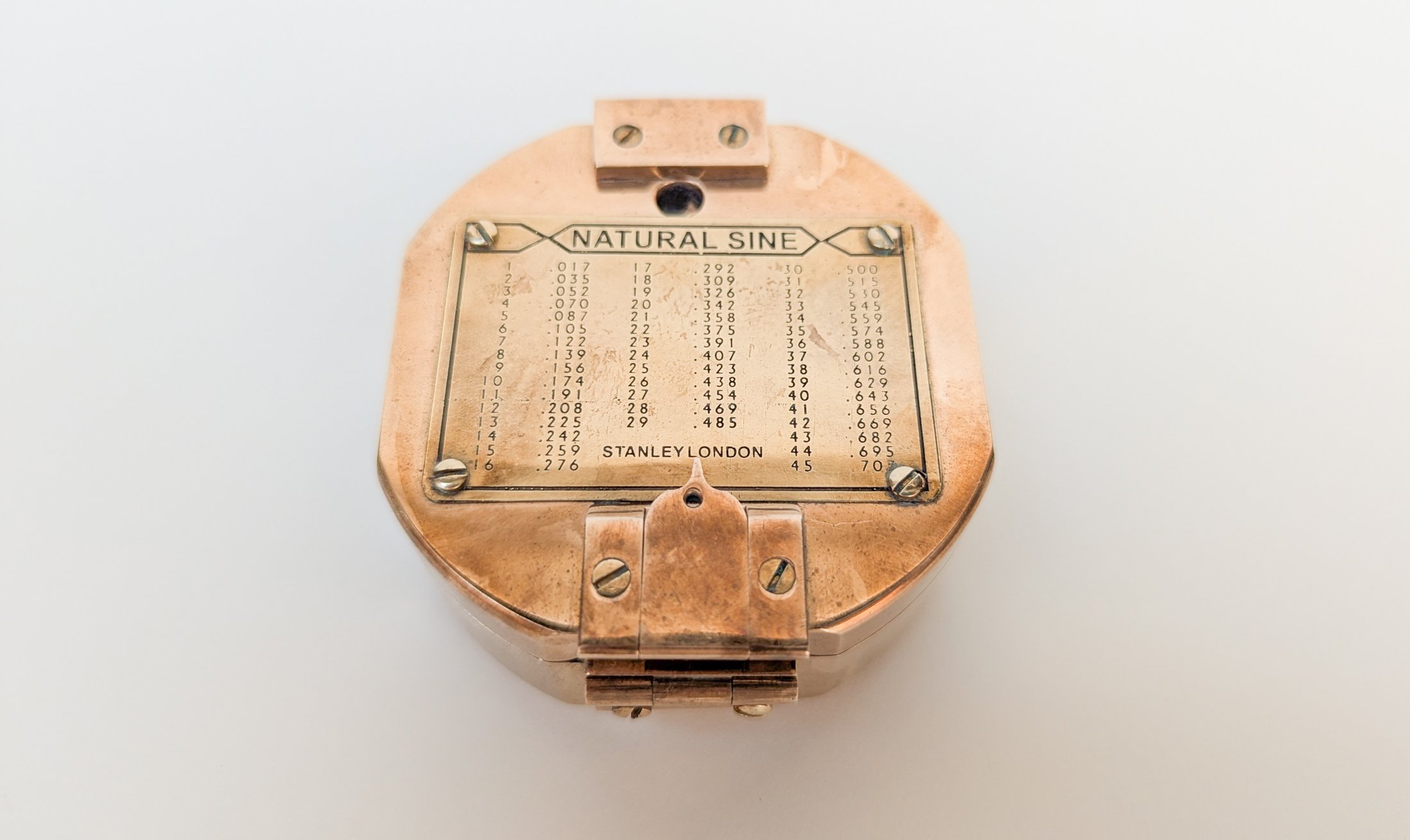
A brass nautical and surveying transit compass produced by Stanley London. The natural sine scale on the back of the compass is used to calculate height and vertical angles of objects.
Most general searches for this compass simply describe it as a brass replica compass that references various vintage military, nautical or miners’ compasses. But the compass is fairly complex in its design, and the functions of each part are not immediately apparent. So I decided to dive in and figure out how it actually works.
What I discovered is fascinating. This device combines a surveyor’s compass, inclinometer, prismatic compass, and hand level all in one instrument. It can be used to measure azimuth (compass bearing), vertical angles, inclination or slope of objects (including the ground), height of objects, and for simply leveling something.
By the way, if you don’t already know, azimuth means the direction of a celestial object from the observer, expressed as the angular distance from the north or south point of the horizon to the point at which a vertical circle passing through the object intersects the horizon.
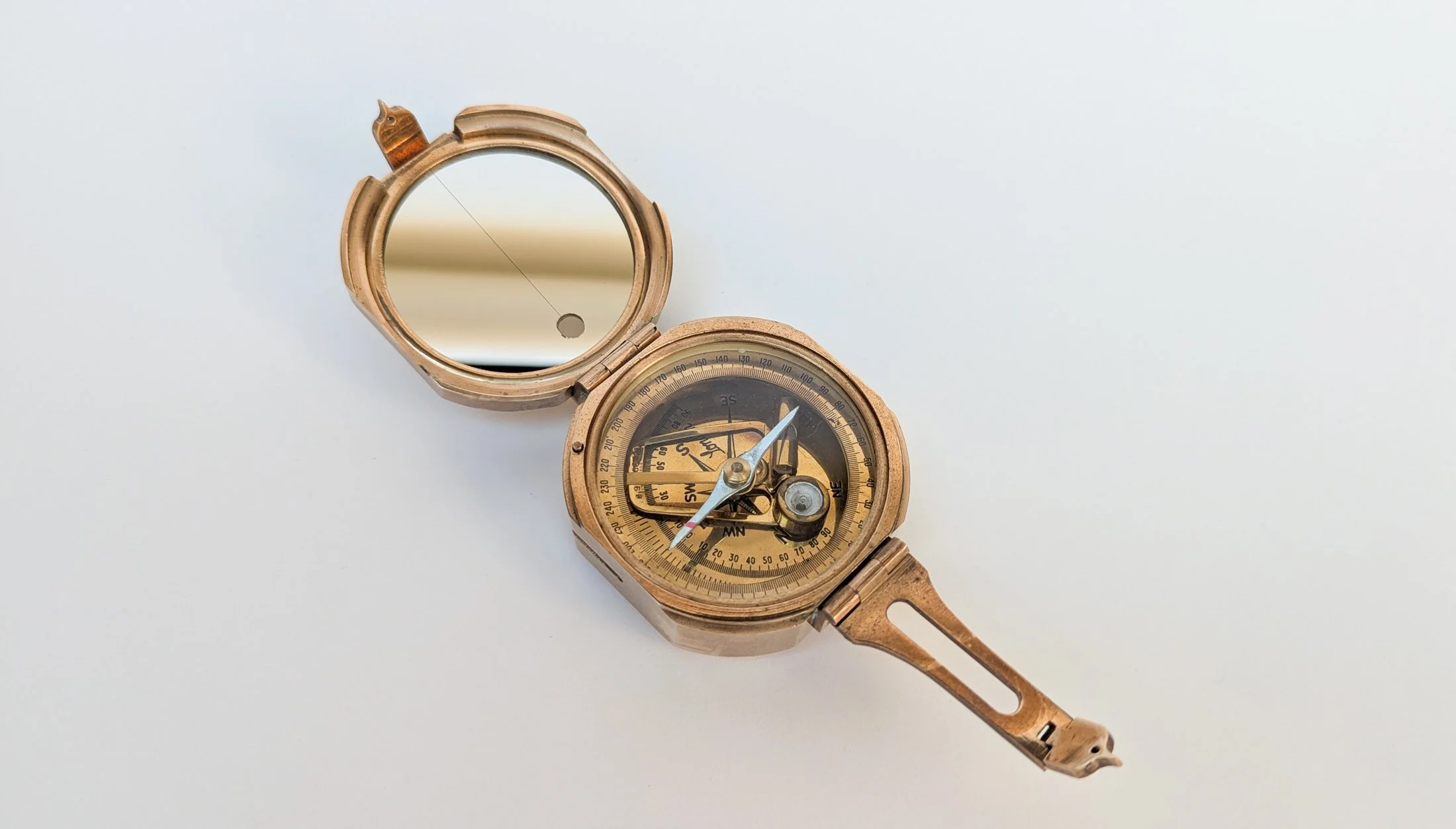
The compass fully opened up. The various scales, mirror with dividing line, sight arms, peep holes, compass needed, and leveling bubbles are all visible.
Because of all of this functionality, the compass can be used by mariners, adventurers, geologists, surveyors, explorers, and more. This device is also sometimes referred to as a miner's compass because of its ability to find the angle and direction of the ground’s slope.
Researching this compass more in depth gave me a better understanding of its features: A hinged lid with a built-in mirror for azimuth measurements when using the transit as a prismatic compass; a folding small and long sight arm; a round level bubble for azimuth measurements, a long level and a vernier adjustment for inclination measurements, and a natural sine scale on the back provides a quick reference chart used in the field to calculate vertical heights, slope distances, and horizontal distances without needing a separate calculator.
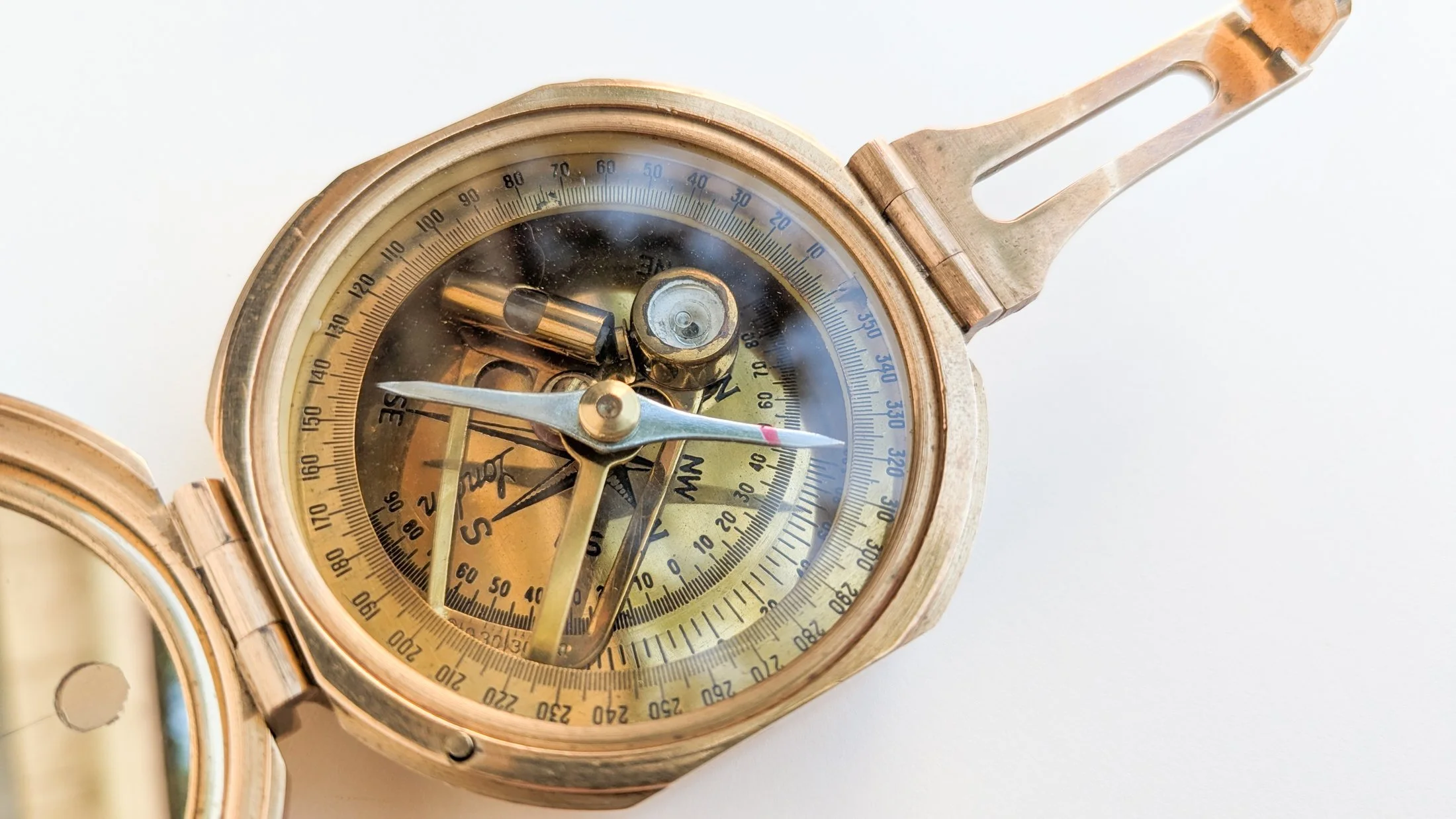
A closer view of the compass inner workings
So now, after having done a deeper dive on what this compass entails and how it actually works, I have a stronger understanding of who and what it's for. The super cool thing is that this beautiful brass compass enables traditional methods of calculation that were used long before digital tools were available.
So this is part of the fun of running my small business — coming across fascinating items which harbor interesting histories just waiting to be discovered!
